Self-Storage Door Springs
Facility Door Service
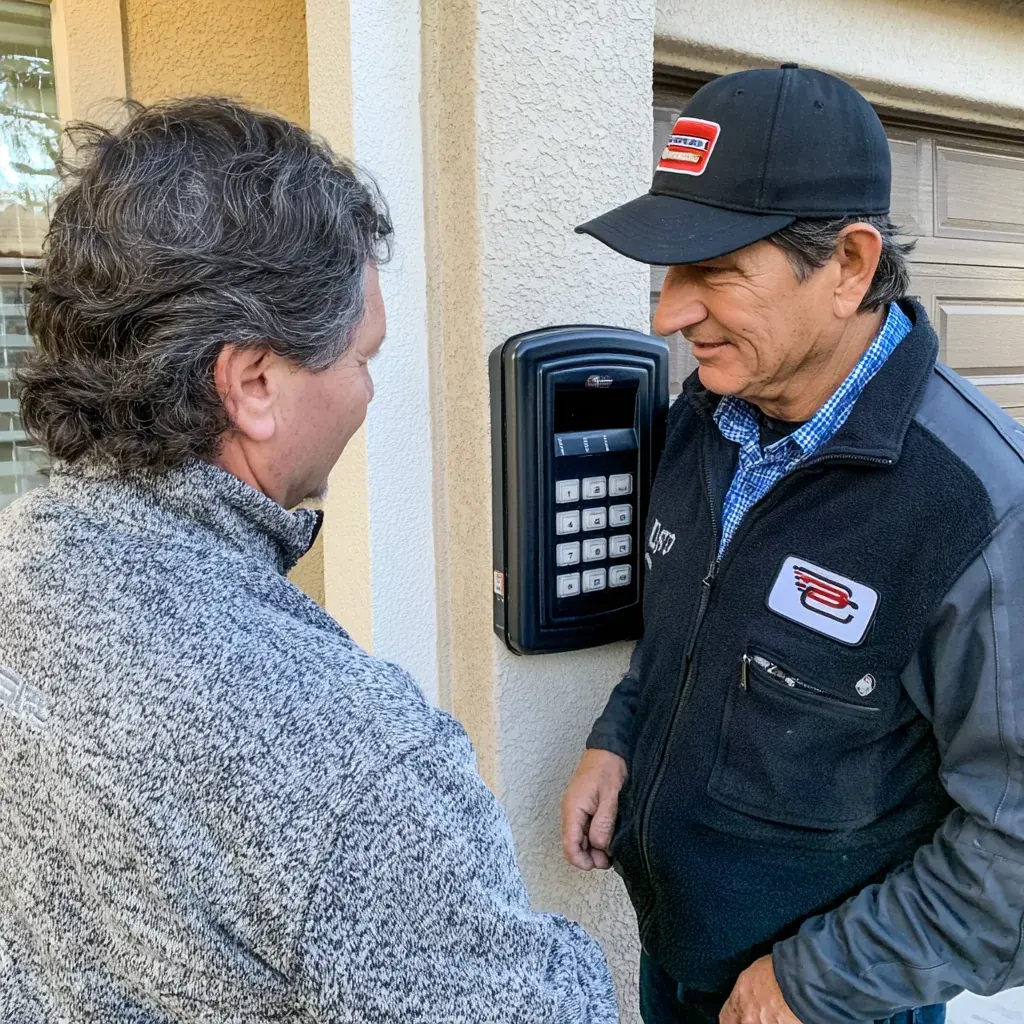
Barrel spring service for Columbus roll-up doors, planned around curtain load, operating demand, and access windows.
Barrel spring service starts with assessing each roll-up door’s slat load, operating demand, and spring rating. The pros we connect you with can quote per opening, plan replacement around a shutdown window, and document the work for facilities records.
Keep people clear when a commercial roll-up becomes heavy, crooked, or stops partway. Do not keep cycling the operator or try to move a loaded barrel by hand. The spring carries much of the slat door’s weight; a failure can leave an opening unusable and disrupt receiving, access, or security. In Columbus, service planning starts with how each opening affects the building. A per-site assessment can identify the right repair scope and help arrange work around the facility’s operating schedule.
A barrel spring is the counterbalance inside the shaft above a rolling steel opening. As the door moves, the spring turns with that shaft and helps carry the curtain’s load. The pros we connect you with can inspect the assembly and confirm what the specific slat door requires before quoting. For Columbus facilities, the assessment should treat each opening as its own piece of equipment. Similar-looking doors may differ in size, construction, hardware, and daily use.
The useful schedule begins with the work the opening supports. A Columbus receiving entrance used throughout a shift has a different interruption cost from a seldom-used storage door. Tell the assessor when each door is busiest, which openings can be taken out of service, and whether a planned shutdown is available. Facilities with locations in Shelbyville may coordinate work differently from a Columbus site. The point is to plan around the actual operating pattern, not assume every roll-up can be serviced at the same time.
The curtain’s slats determine much of the load the barrel spring must balance. A wider door, heavier slats, insulation, or added hardware can change the required spring capacity. The pros we connect you with should assess the actual assembly and door dimensions before proposing replacement parts. For a Columbus site, provide any records of prior door changes; a new lock or curtain can alter the load since the last service. The right specification follows the door as it stands today.
Duty cycle describes how often an opening is operated, and a spring’s cycle rating estimates its intended operating life. A high-cycle assembly may suit a slat door that runs repeatedly through the day, while a low-use opening may need a different rating. These ratings do not set a calendar replacement date by themselves. A Columbus facilities team can compare operating logs with the installed rating and observed condition, then decide when a planned inspection or replacement window makes sense.
| Door demand | Cycle class | Review cue |
|---|---|---|
| Retail entrance | Match barrel spring to opening pattern | After closing, before staff arrival |
| Service counter shutter | Check slat door weight on site | Finish before public access |
| Staff access door | Review high-cycle need against use | Use a weekend shutdown |
| Security grille | Account for rolling steel curtain mass | Coordinate with security handoff |
| Production opening | Compare operation logs with spring duty | Target a shift change |
| Seasonal storefront | Assess wear before a planned pause | Reserve the closure period |
| Shared commercial site | Scope each opening on its own | Sequence work to retain access |
| Separate addresses | Columbus, Fairland, Elizabethtown | Keep distinct quotes and access notes |
Watch how the curtain travels during normal operation. A door that starts sluggishly, hangs unevenly, or settles when stopped may have a spring problem or another mechanical fault. Record the opening identifier, when the symptom appeared, and whether it changes during the shift. Do not test the door repeatedly to confirm a fault. In Columbus, a concise symptom note helps the assessor arrive with a clearer picture and lets staff direct urgent traffic to another approved entrance while the opening is unavailable.
Information gathered before a site visit can cut time spent identifying each opening. Make a door schedule with its location in the building, approximate dimensions, slat construction if known, operator details, and recent symptoms. Add the hours when that door is least needed and any dates when the area can be cleared. A facilities team managing Columbus and Bloomington properties may keep separate records for each site. The pros we connect you with can use those details to scope the visit and discuss a workable service window.
Ask for the quote to separate each door’s work and parts. One opening may need a barrel spring replacement, while another may require further assessment before its scope is clear. The quote should identify the door, relevant dimensions or slat details, proposed spring rating, and included work. For a Columbus building with several roll-ups, this makes approval easier and keeps one door’s requirements from being mistaken for another’s. Confirm how the proposed work fits the access restrictions and schedule you shared.
Keep the completed work in the facilities record for that particular opening. Note the date of service, door identifier, spring type and rating, work performed, and any follow-up recommendation. If the spring rating or door configuration changes, record the reason so a later assessor has useful context. A Columbus site can use those details to compare observed use against the equipment installed. Clear records also help staff recognize when two similar-looking doors have different service histories or replacement needs.
A planned replacement gives you more control over access than waiting for a spring to stop the door. Use the inspection findings, operating history, and spring rating to choose a review point; the rating alone does not predict an exact failure date. Ask about evening or weekend work when the building is quieter, or coordinate with an existing shutdown if one fits. For Columbus operations, agree on which openings must remain available and how the work area will be managed during service.
If the curtain is stranded or the door feels unusually heavy, stop using the operator and keep staff away from the opening. A failed barrel spring can leave the full slat curtain unsupported. Do not attempt to turn the shaft, release hardware, or hold the curtain in place. Report the door location and visible condition to the person arranging service. At a Columbus facility, also identify any safe alternate access route so staff can keep work moving without approaching the affected door.
Plan the service window with the people who control the space around the opening. The work area may need to be clear, and staff may need notice before a door is unavailable. Confirm who can authorize access, who will receive the technician, and how the bay will be closed off while the spring is replaced. A Columbus facility with deliveries scheduled close together may need a different handoff than a site in Greenwood. These details help avoid a technician arriving when the door or work zone cannot be safely reached.
Request a per-site spring assessment when a roll-up shows fatigue, has failed, or is approaching a planned service window. Share how each Columbus door is used, which openings are operationally critical, and what schedule restrictions apply. The pros we connect you with can review the barrel spring, slat door, and available records, then prepare a door-by-door scope. That gives your team a basis for comparing the proposed work with the interruption each opening can tolerate.
Before requesting the assessment, gather the facility address, number of roll-up doors, available dimensions, known spring or door records, and a short description of each symptom. Mark any shutdown dates, evening or weekend access options, and doors that cannot be taken out of service together. You do not need to diagnose the spring yourself. The pros we connect you with can use the site details to discuss the next steps, prepare separate quotes, and schedule around the operating needs you identify.
Keep a commercial roll-up in service by planning spring work before the door stops. A barrel spring helps lift the rolling steel slat door; its duty rating and the curtain’s weight shape the replacement choice. The pros we connect you with can assess each Columbus opening, quote it by site and door, and record the work for facilities staff. If your operation also has locations in Mooresville, New Palestine, and Beech Grove, separate records help you compare needs. Choose a service window that protects access and limits disruption.
A community name alone may not settle coverage for your address; compare your location with the residential areas served, includingColumbus, Elizabethtown and Flat Rock. Ask what the initial visit includes, whether it is billed separately, and how they handle a home beyond their regular route.
Commercial estimates often begin with a visit allowance; $189–$459 offers a guide. Service frequency, opening dimensions, and the mix of doors shape the scope. A business arranging repeat checks may receive a different quote from one requesting a single assessment.In Columbus, a wide commercial door or frequent daily use can call for heavier springs and related hardware, changing the parts list and price. When calling, share the door dimensions, how often it runs, and any spring markings. Give the same details for a property in Greenwood or Martinsville.Compare the available cost bands in pricing guide; commercial overview shows what a scheduled service plan can include.
Facility Door Service
Columbus Dock Doors
Yes. A heavier slat curtain asks more from the barrel spring, so a replacement must suit the door’s actual load. If the curtain has changed, tell the pros we connect you with before they specify the spring. That detail helps avoid fitting a part that cannot support the roll-up properly.
A useful estimate identifies each opening separately. Share its dimensions, curtain construction or known weight, how often it operates, and any visible spring or barrel markings. Note access limits and which doors are essential to daily work. The pros we connect you with can use those details to prepare a per-site quote with separate scope for each door.
Yes. Tell the pros we connect you with which openings can be closed during the shutdown and when access must resume. In Columbus, a planned window lets facilities staff clear the work area and notify affected teams. The sequence can account for critical access, while the work record gives staff a reference for future scheduling.
When a spring wears, a commercial door may become unbalanced and move unevenly during operation. A per-site assessment lets the pros we connect you with quote each opening according to its own requirements. Provide operating details and note any schedule limits when requesting an estimate.
Request a per-site assessment in Columbus to quote each roll-up door and schedule spring work around your operating window.
Call +18127688192